
Arnold De Loof received his degree of Bio-engineer from the University of Ghent, Belgium. Next, he went to the Agricultural University of Wageningen, The Netherlands for his Ph.D. specialization in insect physiology. He obtained his Ph.D. degree in 1969. He further specialized in developmental biology in the laboratory of Prof. Dr. Howard Schneiderman, University of California in Irvine (1972-1973). In 1973, He became docent in the Department of Biology, Zoology, at the University of Leuven, Belgium, and started a research team working on invertebrate physiology. Full professor in 1977 until his retirement in 2006.
His team identified dozens of novel neuropeptides, mainly from insects. This work substantially contributed to the contemporary view in comparative endocrinology that the basic principles of the neuro-endocrine system were already present in the common ancestor of vertebrates and invertebrates and have since been very well conserved in evolution. The unravelling of signalling systems and biochemical communication pathways have been at the centre of his lifelong research.
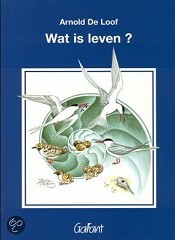
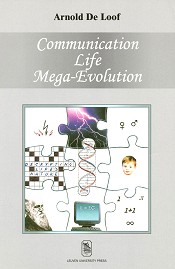
In the late 1980-ties, De Loof was challenged by his undergraduate students to come up with an answer to the most pertinent question in biology, namely: “What exactly is Life? “. He accepted the challenge. The answer was ultimately found after he found out why the - at that time - common procedure for finding that answer was conceptually wrong. Indeed, almost everybody tried to come up with an answer by comparing the properties of ‘living matter’ with those of ‘non-living or inanimate matter’, thereby assuming that these are true opposites like warm versus cold. However, they are false opposites because there is more than one possible non-living opposite to any living system. For example, a living elephant can have a myriad of non-living counterparts. The true opposites are: ‘still alive’ versus ’no longer alive’. That necessitated finding the answer to: “What exactly changes at the very moment of death?” That turned out to be the irreversible loss of the ability to communicate at the highest level of compartmental organization by any type of sender-receiver compartment. This brought the definition of ‘Life’ within reach. What we call ‘Life’ (as the term is used in biology) sounds like a noun, but it is a verb. It is nothing else that the total sum of all communication acts executed at moment t by a given sender-receiver entity at all its levels of compartmental organization. This paved the way for addressing the questions: “What is the relationship between communication- and problem-solving activities as instrumental to adaptation?” and: “How does Life as communication activity evolve?” The answer became a book, first in Dutch (1992) followed by an upgraded version in English (2002). In the latter De Loof introduced the term ‘Mega-Evolution’ to denote the evolution of ‘Life’ as a hardware-software double continuum with 2 memory systems (genetic and cognitive), each with their own sets of rules.
After his retirement, De Loof published several novel concepts in topics in animal physiology: the essence of insect metamorphosis and aging, the Calcigender paradigm that explains the very mechanism for generating the difference between the male and female physiotype, the nature of the juvenile hormone-system of vertebrates, and last but not least a concept, based on communication that seamlessly integrates organic- and cultural evolution that may form the foundation of an Extended Evolutionary Synthesis (EES).
De Loof was quite successful in grant applications, both at the national and international (EU) level. He trained over 60 Ph.D. students and published over 450 papers. He was awarded a prestigious scientific prize in Belgium. From 1994 till 1998 De Loof was President of the European Society for Comparative Endocrinologists