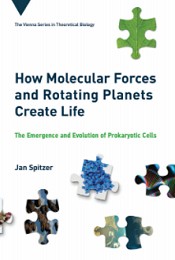
Jan Spitzer is a chemical engineer (MSChemEng, University of Chemistry and Technology, Prague) and a physical chemist (PhD, University of London). After post-doctoral appointments in Canada and USA, he came to Canada as a Natural Sciences and Engineering Research Council of Canada Fellow, working on the colloidal stability of clay tailings from Alberta oil sands. He then worked as a senior scientist and R&D manager in the emulsion polymerization industry, both in Canada and the US. His mathematical theory of the stability of charged colloids, such as colloidal clays, also proved applicable to emulsion polymers and sol-gel transitions within living prokaryotic cells.
Recently, Spitzer reconceptualized origins research using physicochemical constraints, two of which are critical: (i) the correct interpretation of the second law of thermodynamics, which has remained confusing since Schrödinger got it wrong in his book “What is Life?”, and (ii) the phenomenon of biomacromolecular “crowding”, the high concentration of proteins and nucleic acids that are synthesized as the cell grows and divides. He framed origins research as a physicochemical jigsaw puzzle that identifies key stages in the transition of chemistry to biology: from the formation of the first oceans, tidal sediments, and proto-biofilms to progenotes, proto-cells and the first cellular organisms. Life evolved from Archaean biofilms, continuously energized by diurnal photon fluxes, cycling temperatures and tidal hydration and dehydration. Indeed, the cyclical tidal temperatures echo in the protocols for the polymerase chain reaction, in the repeated unwinding of the DNA double helix at a raised temperature, the syntheses of two complementary single DNA chains, and their hybridization into two daughter double helices at a lowered temperature.
Spitzer classifies early Archaean evolution as micro-evolution, meso-evolution, and macro-evolution according to the physicochemical mechanisms that modify the nucleoid during a prokaryotic cell cycle. Micro-evolution does not involve fusions with environmental genetic material, and corresponds to classical Darwinian gradualism. Meso-evolution involves membrane breakage and fusions with environmental (dead) nucleic acids; macro-evolution starts with fusions of membranes of many living and dead cells. The meso- and macro-evolutions are saltational (non-Darwinian) evolutionary mechanisms, reflecting massive horizontal gene transfer and the encapsulations of new membranes. Thus, for about three billion years, single-celled prokaryotes and eukaryotes were evolving concurrently by tidal fusions and re-dispersions in the biofilms of the Precambrian super-eon.