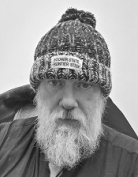
Stefan Olsson

Stefan Olsson

Distinguished professor (Emeritus equivalent), Faculty of Future Technologies; Fujian Agriculture and Forestry University

Olsson has worked as professor in microbiology with speciality in fungal biology and fungal cell biology 1996-2016 and became among other things responsible for a newly started main Master course in Cell biology at University of Copenhagen. Thereafter he moved to get better opportunities to basic research. Olsson is expert in fungal cell biology, microbial ecology and fungal innate immunity with a special interest in comparative cell biology. Olsson developed the concept natural adaptation directed fast evolution (NADFE) of niche determinant genes, a Lamarckian-Darwinian synthesis. His latest paper defines and presents the NADFE possibilities in Eukaryotes from amoeba to human based on experimental data from fungi and phylogeny. 

Profile continued

Stefan Olsson received his B.A. in Biology and Ph.D. in Microbiology from Lund University, Lund Sweden. Thereafter he received a grant from the Swedish Science Research Council to carry out Post Doc research on nutrient translocation in fungi together with Professor David Jennings at Liverpool University followed with continued grants for his own continued Post Doc research in fungal physiology at Department of Microbial Ecology, Lund University. He received his highest possible Swedish academic degree as Docent (Privatdozent German equivalent, i.e. professor competence) in Microbial Ecology at the Faculty of Science at Lund University. He then got a position as Associate Professor at University of Copenhagen, Denmark and started to commute to Copenhagen 1996-2016 where he taught microbial ecology and started a new type of molecular biology course on master level focused on understanding, instead of remembering. That course attracted top students from the whole university, the whole of Denmark and other European countries. It became especially recommended to students with ambitions to start on a future PhD project.  He realized early that science in new areas of interests are heavily dependent on method development thus developing new experimental methods, mathematical methods handling the output of the methods and finally bioinformatic techniques to handle secondary data from other labs has become a leading theme of him.

Quote


"Evolution proceeds with necessity by inheriting constraints and possibilities from the first cells to now. It mainly repurposes genes instead of “inventing” new ones. If you want to understand gene functions, and most genes have several functions, you need to try to understand the evolutionary history of cells and multicellular organisms. Their biotic and abiotic cell interactions frame their existence from their anaerobic beginnings billions of years ago until now. Finally, a not needed gene is soon lost through random mutations and can hardly ever be regained even if it could be needed under new circumstances. Different physiological, collaboration (with other organisms) and behavioural workarounds then need to evolve”"

(Main message about evolution at Introductory lectures to Master students in Molecular Biology at University of Copenhagen)

Publications

Websites