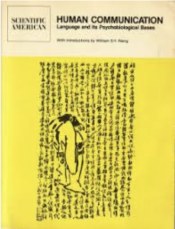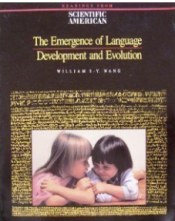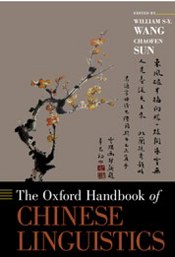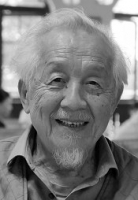
William Shiyuan WANG received his early education in Shanghai, China. After graduating from Columbia College, he received a PhD in Linguistics from the University of Michigan in 1960. After affiliating with Massachusetts Institute of Technology, Ohio State University, he was appointed Professor of Linguistics at the University of California at Berkeley in 1965. He has also taught briefly at Stockholm University (Sweden), Doshisha University (Japan), and Osmania University (India). In 1973, he first returned to China to lecture at Peking University; after several lecture trips to Chinese universities, he was appointed honorary professor at Peking University.
He moved to Hong Kong in 1996, first to the City University of Hong Kong, then to the Chinese University of Hong Kong, based in their respective departments of electronic engineering. In 2015, he was appointed Chair Professor of Language and Cognitive Sciences at the Hong Kong Polytechnic University. He has held resident fellowships at institutes of advanced study: at Stanford (twice), at Kyoto, and at Bellagio (Italy). He is a Fellow of the Linguistic Society of America. He has received honorary doctorates from the University of Chicago and the University of Macau. Among various awards he has received, the latest is the Chao Prize for Lifetime Achievement in May 2024.
His interest in evolutionary theory began in the 1960s when he challenged the traditional view of sound change in language. Just as genetic change accumulates one organism at a time, a sound change accumulates one word at a time, diffusing across words as well as across speakers. This theory has been verified in detail in many languages as well as in other levels of language structure.
Similarly, just as organisms vary and speciate through interbreeding, languages vary and speciate when their speakers come to sustained contact and adopt each other’s linguistic features and constructions as well as to interbreed. This is clearly the case with the languages and peoples of China, as revealed by fossils and ancient DNA. Much of his work in this area has also been devoted to finding cognitive and neuroscientific bases for language change, both phylogenetically and ontogenetically.
He is excited over recent discussions of evolution among biologists, e.g., Sagan (1967), Margulis-Sagan (2000), Shapiro (2011), Noble (2017, 2024), Ball (2024), etc. Though his knowledge of biology is rudimentary, having learned most of it through numerous personal interactions with the late geneticist Cavalli-Sforza, he resonates well with these recent discussions. It was a book by Cavalli-Sforza and Feldman in 1981, and an essay in 1994 by Cavalli-Sforza, An evolutionary view in linguistics, that explicitly drew the parallels for him between biology and language. He believes firmly that investigation into these parallels will continue to be fruitful toward understanding evolution in its broadest sense.