Books
-
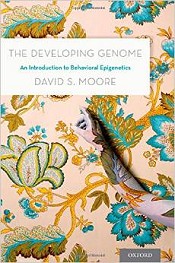
The Developing Genome: An Introduction to Behavioral Epigenetics
Author:
Why do we grow up to look, act, and feel as we do? Through most of the twentieth century, scientists and laypeople answered this question by referring to two factors alone: our experiences and our genes. But recent discoveries about how genes work have revealed a new way to understand the developmental origins of our characteristics. These discoveries have emerged from the new science of behavioral epigenetics—and just as the whole world has now heard of DNA, “epigenetics” will be a household word in the near future.
Behavioral epigenetics is important because it explains how our experiences get under our skin and influence the activity of our genes. Because of breakthroughs in this field, we now know that the genes we’re born with don’t determine if we’ll end up easily stressed, likely to fall ill with cancer, or possessed of a powerful intellect. Instead, what matters is what our genes do. And because research in behavioral epigenetics has shown that our experiences influence how our genes function, this work has changed how scientists think about nature, nurture, and human development. Diets, environmental toxins, parenting styles, and other environmental factors all influence genetic activity through epigenetic mechanisms; this discovery has the potential to alter how doctors treat diseases, and to change how mental health professionals treat conditions from schizophrenia to post-traumatic stress disorder. These advances could also force a reworking of the theory of evolution that dominated 20th century biology, and even change how we think about human nature itself.
In spite of how important this research is, behavioral epigenetics is still relatively unknown to non-biologists. The Developing Genome is an introduction to this exciting new discipline; it will allow readers without a background in biology to learn about this work and its revolutionary implications.
-
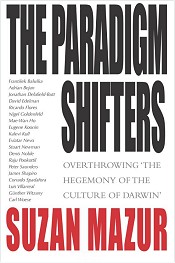
The Paradigm Shifters: Overthrowing ‘the Hegemony of the Culture of Darwin’
Author:
Major scientists from a dozen countries present evidence that a paradigm shift is underway or has already taken place, replacing neo-Darwinism (the standard model of evolution based on natural selection following the accumulation of random genetic mutations) with a vastly richer evolutionary synthesis than previously thought possible.
-

Junk DNA: A Journey Through the Dark Matter of the Genome
Author:
For decades after identifying the structure of DNA, scientists focused only on genes, the regions of the genome that contain codes for the production of proteins. Other regions that make up 98% of the human genome were dismissed as "junk," sequences that serve no purpose. Yet recently researchers have discovered variations and modulations in this junk DNA that underwrite a number of intractable diseases. This knowledge has led to innovative research and treatment approaches that may finally control these conditions.
Junk DNA can play vital and unanticipated roles in the control of gene expression, from fine-tuning individual genes to switching off entire chromosomes. Its function has forced scientists to revisit the very meaning of the word "gene" and has engendered a bitter battle over whether or not this genomic "nonsense" is the source of human biological complexity. Drawing on her experience with leading investigators in Europe and North America, Nessa Carey provides a clear and compelling introduction to junk DNA and its critical involvement in phenomena as diverse as genetic diseases, viral infections, sex determination in mammals, disease treatments, and evolution. We are only now unlocking the secrets of junk DNA, and Carey's book is an indispensable resource for navigating the codes and controversies of this fast-growing and hotly disputed field.
-
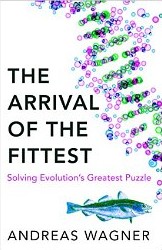
The Arrival of the Fittest
Author:
We all know about natural selection and the so-called survival of the fittest, which governs how evolution preserves useful adaptations in each subsequent generation of a species. Unfortunately, random change alone could not have produced life as we know it – the maths don't add up, according to cutting-edge research by Andreas Wagner in the revolutionary field of computational biology.
In the last decade, Wagner has detected the biological networks guiding the creation of innovation. His investigations of the genes of everything from bacteria to humans is rewriting our understanding of how exactly evolution works and providing insights into the origins of creativity, with lessons that can be applied far beyond genomes.
In The Arrival of the Fittest, Wagner delivers a breathtaking new look at our origins, from the genes up. -
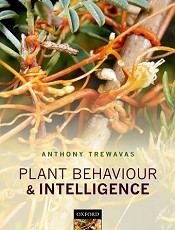
Plant Behaviour and Intelligence
Author:
- First book to properly address the controversial issue of plant intelligence
- Equates the concept of intelligent behaviour with that of adaptively variable behaviour
- Provides a novel integration of signalling, behaviour and behavioural ecology, all set in the context of plant studies
- Emphasizes the experimental observations of plasticity of behaviour and its adaptive variability
- Written by the leading figure in the field
This novel book is the first to properly address the controversial issue of plant intelligence, arguing convincingly that cells and whole plants growing in competitive wild conditions exhibit aspects of plant behaviour that can be accurately described as 'intelligent'. The author expands on three main insights drawn by the Nobel Prize winning botanist Barbara McClintock: firstly that plant cells may have knowledge of themselves; secondly that they receive challenges which lead to behavioural changes; finally, that they do so in a manner which implies assessment and intelligent behaviour. By equating the concept of intelligent behaviour with that of adaptively variable behaviour, the book provides a novel integration of signalling, behaviour, and behavioural ecology, all set within the context of plant studies. Plant Behaviour and Intelligence begins with chapters on the origins and multicellular nature of plant life, before going on to discuss novel behaviours such as branch initiation and growth, unusual behaviour of leaves, and how roots reconstruct their sensing systems and are capable of self-recognition. An entire chapter is devoted to the nature of intelligence and another to the vexed question of 'consciousness', as applied to plant life. This advanced textbook will be suitable for senior undergraduate and graduate level students taking related courses in plant ecology and evolution. It will also be of relevance and use to a broader audience of professional plant ecologists seeking an authoritative reference text to help them navigate the complexity and controversy of plant behaviour.
Readership: Senior undergraduate and graduate level students taking related courses in departments of plant ecology and evolution. It will also be of interest and use to a broader audience of professional plant ecologists.
-
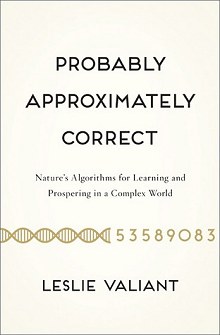
Probably Approximately Correct: Nature’s Algorithms for Learning and Prospering in a Complex World
Author:
How does life prosper in a complex and erratic world? While we know that nature follows patterns—such as the law of gravity—our everyday lives are beyond what known science can predict. We nevertheless muddle through even in the absence of theories of how to act. But how do we do it?
In Probably Approximately Correct, computer scientist Leslie Valiant presents a masterful synthesis of learning and evolution to show how both individually and collectively we not only survive, but prosper in a world as complex as our own. The key is “probably approximately correct” algorithms, a concept Valiant developed to explain how effective behavior can be learned. The model shows that pragmatically coping with a problem can provide a satisfactory solution in the absence of any theory of the problem. After all, finding a mate does not require a theory of mating. Valiant’s theory reveals the shared computational nature of evolution and learning, and sheds light on perennial questions such as nature versus nurture and the limits of artificial intelligence.
Offering a powerful and elegant model that encompasses life’s complexity, Probably Approximately Correct has profound implications for how we think about behavior, cognition, biological evolution, and the possibilities and limits of human and machine intelligence.
-

Evolution in Four Dimensions: Genetic, Epigenetic, Behavioral, and Symbolic Variation in the History
Author:
Ideas about heredity and evolution are undergoing a revolutionary change. New findings in molecular biology challenge the gene-centered version of Darwinian theory according to which adaptation occurs only through natural selection of chance DNA variations. In Evolution in Four Dimensions, Eva Jablonka and Marion Lamb argue that there is more to heredity than genes. They trace four "dimensions" in evolution -- four inheritance systems that play a role in evolution: genetic, epigenetic (or non-DNA cellular transmission of traits), behavioral, and symbolic (transmission through language and other forms of symbolic communication). These systems, they argue, can all provide variations on which natural selection can act. Evolution in Four Dimensions offers a richer, more complex view of evolution than the gene-based, one-dimensional view held by many today. The new synthesis advanced by Jablonka and Lamb makes clear that induced and acquired changes also play a role in evolution.After discussing each of the four inheritance systems in detail, Jablonka and Lamb "put Humpty Dumpty together again" by showing how all of these systems interact. They consider how each may have originated and guided evolutionary history and they discuss the social and philosophical implications of the four-dimensional view of evolution. Each chapter ends with a dialogue in which the authors engage the contrarieties of the fictional (and skeptical) "I.M.," or Ifcha Mistabra -- Aramaic for "the opposite conjecture" -- refining their arguments against I.M.'s vigorous counterarguments. The lucid and accessible text is accompanied by artist-physician Anna Zeligowski's lively drawings, which humorously and effectively illustrate the authors' points.
-
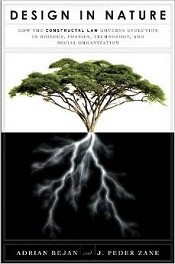
Design in Nature: How the Constructal Law Governs Evolution in Biology, Physics, Technology, and Social Organization
Author:
In this groundbreaking book, Adrian Bejan takes the recurring patterns in nature—trees, tributaries, air passages, neural networks, and lightning bolts—and reveals how a single law of physics, the Constructal Law (1996), accounts for the evolution of these and all other designs in our world.
Everything—from biological life to inanimate flow systems—generates shape and structure and evolves in a sequence of ever-improving designs in order to facilitate flow. River basins, cardiovascular systems, and bolts of lightning are very efficient flow systems to move a current—of water, blood, or electricity. Likewise, the more complex architecture of animals evolves to cover greater distance per unit of useful energy, or increase their flow across the land. Such designs also appear in human organizations, like the hierarchical “flowcharts” or reporting structures in corporations and political bodies.
All are governed by the same principle, known as the Constructal Law, and configure and reconfigure themselves over time to flow more efficiently. Written in an easy style that achieves clarity without sacrificing complexity, Design in Nature is a paradigm-shifting book that will fundamentally transform our understanding of the world around us.
-
Relentless Evolution
Author:
At a glance, most species seem adapted to the environment in which they live. Yet species relentlessly evolve, and populations within species evolve in different ways. Evolution, as it turns out, is much more dynamic than biologists realized just a few decades ago. In "Relentless Evolution", John N. Thompson explores why adaptive evolution never ceases and why natural selection acts on species in so many different ways. Thompson presents a view of life in which ongoing evolution is essential and inevitable. Each chapter focuses on one of the major problems in adaptive evolution: How fast is evolution? How strong is natural selection? How do species co-opt the genomes of other species as they adapt? Why does adaptive evolution sometimes lead to more, rather than less, genetic variation within populations? How does the process of adaptation drive the evolution of new species? How does coevolution among species continually reshape the web of life? And, more generally, how are our views of adaptive evolution changing? "Relentless Evolution" draws on studies of all the major forms of life - from microbes that evolve in microcosms within a few weeks to plants and animals that sometimes evolve in detectable ways within a few decades. It shows evolution not as a slow and stately process, but rather as a continual and sometimes frenetic process that favors yet more evolutionary change.
-
Genome Stability: DNA Repair and Recombination
Author:
Genome Stability: DNA Repair and Recombination describes the various mechanisms of repairing DNA damage by recombination, most notably the repair of chromosomal breaks. The text presents a definitive history of the evolution of molecular models of DNA repair, emphasizing current research. The book introduces the central players in recombination. An overview of the four major pathways of homologous recombinational repair is followed by a description of the several mechanisms of nonhomologous end-joining. Designed as a textbook for advanced undergraduate and graduate students with a molecular biology and genetics background, researchers and practitioners, especially in cancer biology, will also appreciate the book as a reference.