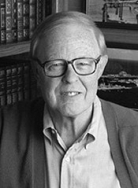

Peter A. Corning is currently Director of the Institute for the Study of Complex Systems. His academic background includes a B.A. from Brown University and a social science Ph.D., from New York University, as well as post-doctoral training in the biological sciences under an NIMH fellowship at the Institute for Behavioral Genetics at the University of Colorado and nine years of teaching in Stanford University=s interdisciplinary Human Biology Program, with research appointments in Stanford’s Behavior Genetics Laboratory and Engineering Economic Systems Department. Dr. Corning was also a recent senior fellow at the Collegium Budapest (Institute for Advanced Study) in Hungary. His other professional affiliations include the International Society for the Systems Sciences, where he is a past-president and the International Society for Bioeconomics, where he has served as treasurer. He has also been a member of the Council of the Association for Politics and the Life Sciences, as well as an actively participating member of the American Society for Cybernetics, the Human Behavior and Evolution Society, the International Society for Endocytobiology, and the International Society for Human Ethology. In addition, he has served on the editorial boards of four scientific journals and is the author of six books and more than 200 scientific papers and book chapters. His academic books include The Synergism Hypothesis: A Theory of Progressive Evolution, (New York: McGraw-Hill 1983); Nature's Magic: Synergy in Evolution and the Fate of Humankind, (New York: Cambridge University Press 2003); Holistic Darwinism: Synergy, Cybernetics, and the Bioeconomics of Evolution, (Chicago: University of Chicago Press 2005); and most recently: The Fair Society: The Science of Human Nature and the Pursuit of Social Justice, (Chicago: University of Chicago Press 2011). Two of his theoretical contributions include a causal theory of complexity in evolution known as the Synergism Hypothesis and Control Information Theory, a theory of communications and control in “purposeful” (cybernetic) processes.